
Defending the Septuagint
The case against picking & choosing scripture.

What is the oldest copy we have of the Old Testament? The answer may surprise you.
The oldest complete Hebrew Old Testament, the Leningrad Codex, is from the 1000s A.D., 700 years after the oldest Christian Old Testament, the Vatican Codex, dating to the 4th century A.D.
Although most people would assume the there is an ancient complete Hebrew Old Testament, in fact the Septuagint translation (from the Vatican Codex) is the oldest copy of the Old Testament that we have, by almost 700 years.
What scriptures did Jesus and the Apostles use?
It is clear from the New Testament that the Apostles used the Septuagint almost exclusively in their quotations. No credible scholar disputes this point.
Jesus, Peter, Paul, Matthew, Luke, John, etc., all used the Septuagint in their quotations.
So if the Septuagint is the oldest scripture that we have, and it was used almost exclusively by the Apostles in the New Testament, why do many modern Christians reject large parts of the Septuagint as inspired by God? And why does this rejection open the door to rejecting historic portions parts of the New Testament as well?
Why was the Septuagint good enough for Jesus, but not for John Calvin?
Why was the long ending of Mark good enough for Irenaeus in the 2nd century, but not for John MacArthur in the 20th?
Why were the Letters of Paul considered good for teaching for 1900 years, but not for Brandon Robertson?
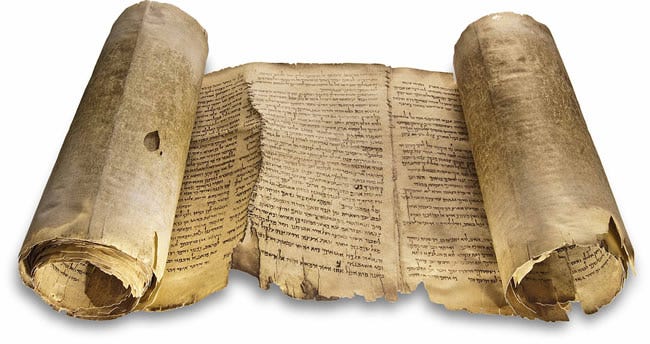
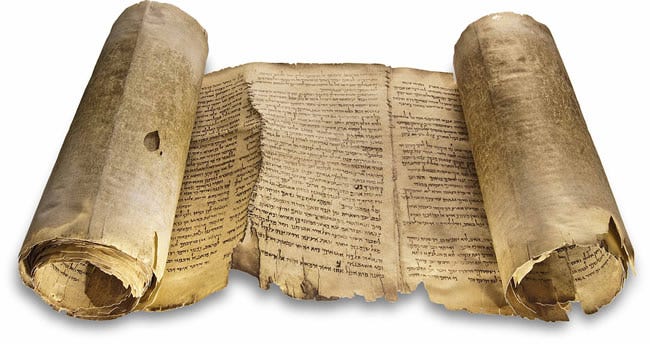
What is the Septuagint?
According to the Letter of Aristeas, in the 3rd century B.C., the Hellenistic King of Alexandria in Egypt, Ptolemy II, brought Jewish scribes from Jerusalem to Alexandria in order to translate the sacred books of the Jews into Greek for the Library of Alexandria.
According to the story, seventy two scholars were commissioned for this project: thus the name Septuagint, meaning “seventy,” and the commonly used abbreviation “LXX,” the Roman numeral for seventy.
This copy became the most common version of the Old Testament, as the Greek language and culture quickly dominated the known world following Alexander’s conquests.
This is the copy of the OT that is most often cited by the Gospels. The Apostles are quoting the Septuagint, not the Hebrew Text, which is clear by syntax structure of their quotations.
The early church was primarily Greek, thus the early church almost exclusively used the Greek Septuagint in spreading the Gospel.
What is in the Septuagint?
The Septuagint contains the complete Jewish Old Testament to include the deuterocanonical books, the extra 7 books present in the Catholic, Orthodox, and Anglican Bibles. As stated before, the case for the inclusion of these books is strong, especially since:
Every early copy of the Septuagint that exists today contains the additional books (4th century Codex Sinaiticus, 4th century Codex Vaticanus, 5th century Codex Alexandrinus, and 6th century Codex Marchalianus).
There is not a single copy of the Bible that shows Christians using only the 39 books of the Old Testament, until after the American Revolution.
Both Martin Luther and John Calvin removed the “canonicity” of the deuterocanonical books, but they still included them in their published Bibles.
The first known Bible with 66 books was published in 1804.
The King James Bible, the gold standard for many Protestants, contained the apocryphal books for the first 250 years. These books were removed from the KJV in 1885, although still part of the official canon in the Anglican Church.
At no point in the early church does a single church father suggest that the Septuagint did not include the 46 books of the Old Testament. In short, if you are using an Old Testament that does not include the additional 7 books, you are not using the same Old Testament that the Apostles used.
Why Change the Septuagint?
It is believed that in 90 A.D., the Jewish Council of Javneh finally determined the Jewish Canon of Scriptures.
Modern scholars believe the Pharisees recognized the 39 book Old Testament canon, although they certainly knew and understood the additional 7 books of the Apocrypha, or Deuterocanon.
The Sadducees, who Jesus addresses many times in the Gospels, did not share the same canon as the Pharisees. It is widely understood that the Sadducees only accepted the first 5 books, the Pentateuch, as scripture.
The Essenes appear to have recognized the modern day canon of 46 books of the Old Testament, since in their most famous legacy, the Dead Sea Scrolls, nearly 1/3 of all scripts are from the Deuterocanonical books alone.
The Council sought to distance themselves from Christians, therefore they rejected all Greek scriptures, including the Septuagint and the entire New Testament corpus.
Therefore, if the Jewish Council of Javneh is our ultimate authority on canonicity, then we should likewise reject the entire New Testament as well, since the council clearly affirmed this.
The Case for Rejecting the Septuagint’s Canonicity
Those that reject the Deuterocanonical books generally follow this argument:
The Jewish Council of Javneh in A.D. 90 ruled that all books written after Malachi are outside of the Jewish Canon.
1st Century Jewish historian Josephus offers a list of 22 books of the Torah which appears to match the Protestant 39 book collection (Against Apion, 1.38–42).
St. Jerome proposed a 66 book canon of scripture when he translated the Bible into Latin, the Vulgate, citing the local Jewish Rabbis’ rejection of these books.
There is not a single direct quotation of the Apocryphal books in the New Testament.
The debate about the canonicity in the early church revolves around whether the Jews recognized the books. Some Church Fathers such as Jerome noted that the Jews at the time did not accept these books. Throughout the Vulgate, Jerome says certain books are non-canonical for the 4th century Jews; in his prologue to Kings, he specifically cites Wisdom, Sirach, Judith, and Tobit as being read, but non-canonical.
Despite his comments, Jerome translated the books and included them in his final canon. In the prologue to Judith, he tells his patron that “because this book is found by the Nicene Council [of A.D. 325] to have been counted among the number of the Sacred Scriptures, I have acquiesced to your request” to translate it.
Many other Church Fathers, such as Augustine, rejected Jerome’s position since the Pharisees held no authority to tell the Christians what was and was not scripture.
Finally, many people argue that if the Apocryphal books are not directly quoted in the New Testament, they should not be considered scripture. This is an argument from silence, an obviously weak argument. If a New Testament quotation is required to be canonical, then the books of Ecclesiastes, Song of Solomon, Zephaniah, Nahum, Ezra, Nehemiah, Obadiah, and Esther should be removed as well.
While the Apocryphal books are not directly quoted in the New Testament, there are as many as 90 references to events and people, including by Jesus, Paul, Peter, and John, such as:
John 10:22 - Jesus celebrated Hanukkah with the disciples, which is the celebration of event recorded in the 2 Maccabees.
Matt. 9:36 – the people were “like sheep without a shepherd” is same as Judith 11:19 – sheep without a shepherd.
Heb 11:35 – The Author teaches about the martyrdom of the mother and her sons described in 2 Macc. 7:1-42.
Heb. 12:12 – the description “drooping hands” and “weak knees” comes from Sirach 25:23.
Rev. 1:4 – the seven spirits who are before his throne is taken from Tobit 12:15 – Raphael is one of the seven holy angels who present the prayers of the saints before the Holy One.
Can We Reject Scripture?
Who has the authority to determine what is scripture and what is not?
Some people would argue a church council, or maybe a confession written by the denomination are required to define the canon. Unfortunately, as we will see, many modern ‘Christians’ are willing to make their own determinations and throw out scriptures they don’t like.
Martin Luther moved Hebrews, James, Jude, and Revelations to the end of his German Bible, as a New Testament Apocrypha, and stopped teaching these books in his seminaries. This movement has been largely rejected by other Protestants, although many today are still uncomfortable with the book of James.
In addition to the New Testament changes, Luther also removed the Deuterocanonical books since he did not feel they were inspired, citing Jerome in his explanation, despite the fact that they precede Christ’s ministry by 300+ years.
Progressives say that the Bible doesn’t have to be literal, therefore we are not bound by the moral teachings of the Old Testament.
Other Progressives (and some mainline) say Paul was not meant for all Christians, only for that specific church, therefore we are not bound by Paul’s instructions.
Many mainstream Christians, including John MacArthur, think that since the ending of Mark (Mark 16:9-20) may be been an addition, it should not be considered as “inspired by God,” to include Jesus’ command to baptize new believers.
The Story of the Adulterous Woman (John 7:53-8:11), was not found in many early manuscripts, therefore The Gospel Coalition does not advise that it (or the citation from Mark) be used to inform any doctrine, since it is likely not inspired.
So as we can see, if modern textual scholars question the original nature of certain passages, many modern theologians feel they have the authority to say these Biblical passages are no longer “inspired” by God. But who are they? Who is John MacArthur or Peter Orr to say that a verse included in 99% of all manuscripts and explicitly quoted by Irenaeus in the 2nd century is no longer inspired scripture?
And when did God stop inspiring scripture? Did God inspire the first draft of Mark, but not revisions?
Was Paul the source of inspiration for Romans, but the scribe (Tertius) that wrote the book of Romans was not?
Does that mean that Tertius’ greeting in Romans 16:22 is an uninspired verse in an otherwise inspired letter?
We have copies of the longer ending of Mark from 190 A.D., but yet MacArthur has the authority to say that an 1,800 year old section of the Bible is a mistake and he knows better? I hope you can see the slippery slope of individual interpretation.
When we allow theologians that we like to throw out the Septuagint from the 3rd Century B.C., that are explicitly referenced in scripture and we know were read by the Apostles, where do we draw the line? Now the Adulterous woman isn’t inspired. Or the ending of Mark. Or the letters of Paul. Or the book of James.
Going back to the question of the Septuagint, who is Martin Luther to say that the 70 Jewish scholars who interpreted the scriptures explicitly quoted by Jesus and the Apostles got it wrong? I hope you can see how arrogant of a position this is. These Jewish scholars did not understand the scriptures as well as a German monk 1800 years later. But don’t worry, he’ll fix their error, and throw out a few New Testament books while he’s at it.
So in the end, who gets to determine what is scriptural and what is not? If each reader of the Bible has the authority to cut out entire books that date 300 years before Christ, or books written by early Apostles, or verses included since the 2nd century A.D., why even have a Bible at all?
Important to remember how New Testament writers cited the Septuagint translation!